
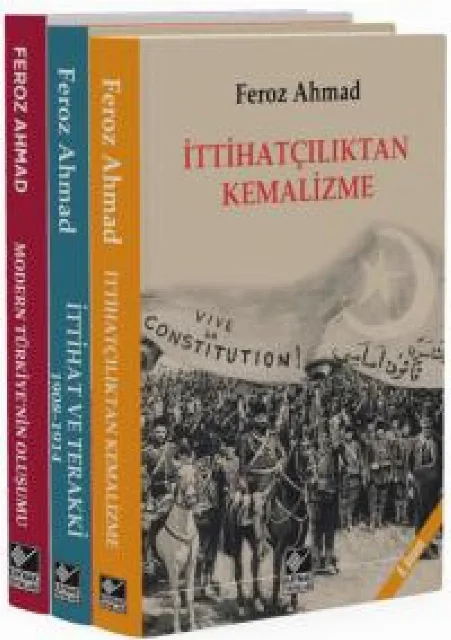
Recent History Set - Feroz Ahmad
1) The Making of Modern Türkiye
In this book, Feroz Ahmad examines the formation of the Republic of Turkey through its social, political, and economic dimensions.
Some of the topics covered in the book include:
Is Turkey a Military Society?..
The Ottoman Legacy...
From Empire to Nation (1908–1923)...
New Turkey: Political Life (1923–1945)...
New Turkey: Society and Economy (1923–1945)...
The Multi-Party Puzzle (1945–1960)...
Military Intervention, Institutional Restructuring, and Ideological Politics (1960–1971)...
Military Intervention, Social Democracy, and Political Terror (1971–1978)...
Military Intervention, Political and Economic Restructuring (1980–1991)...
Türkiye’s Present and Future...
2) The Committee of Union and Progress (İttihat ve Terakki) 1908–1914
In this book, Feroz Ahmad examines the Committee of Union and Progress (CUP) during the 1908–1914 period. Originally published in English in 1969 under the title *The Young Turks*, this study seeks to answer the following questions: What developments during the final phase of the Ottoman Empire transformed the Committee of Union and Progress into a center of power?
Did the Committee of Union and Progress possess a homogeneous ideology? What were the Committee’s political stance and its approach to reform, and what significance did this approach hold for the subsequent development of a Western-oriented, republican tradition? We present this research—which includes a comprehensive index and a "Who’s Who" section detailing the biographies of the individuals mentioned in the book—accompanied by a foreword by Sina Akşin.
3) From Young Turkism to Kemalism
In *From Young Turkism to Kemalism*, Feroz Ahmad examines the Young Turk era and Kemalist Turkey, exploring both the continuities and the ruptures between them. Through meticulous research—drawing on period publications, relevant books, memoirs, and both classified and unclassified documents and letters from the British Public Record Office—the author sheds light on the relationships and power struggles between local and international centers of influence, as well as the underlying context of these dynamics. Ahmad presents his findings and the documents he uncovered to the reader through objective analysis:
“Despite its unique character, Kemalism had precursors—both in terms of its intellectual framework and its social foundations.
To approach such an ideology while disregarding the contributions of the Young Turk era—a period when certain ideas later developed by Mustafa Kemal were first introduced and debated—would be an ahistorical stance…”
More from This Exhibitor
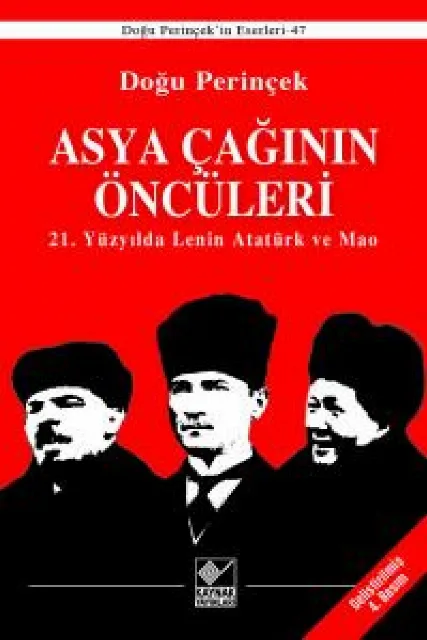
Education And Resource Publications
Pioneers of the Asian Century
GÖREV KİTAP VE YAYINCILIK TİC LTD ŞTİ
Cultural Publications
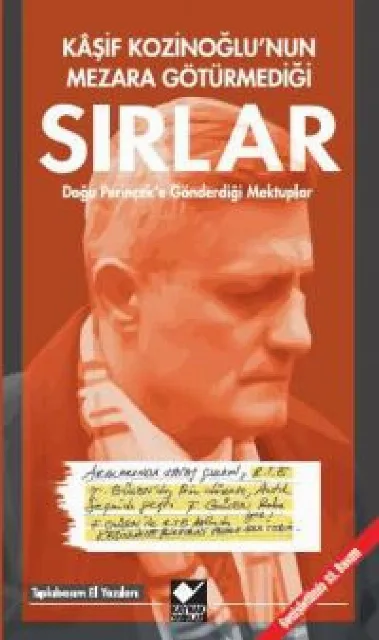
The Secrets Kâşif Kozinoğlu Did Not Take to the Grave
GÖREV KİTAP VE YAYINCILIK TİC LTD ŞTİ
Similar Products

Education And Resource Publications
8th Grade Math Test Book
HIZ YAYIMCILIK BASIM DAĞITIM SAN VE TİC A.Ş.


Education And Resource Publications
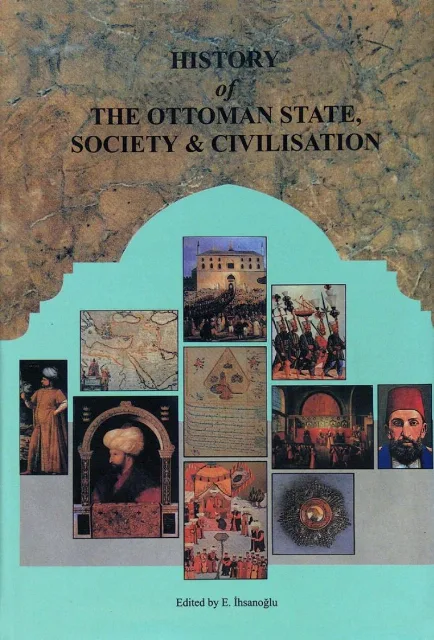
History of The Ottoman State, Society and Civilisation
İSLAM TARİH SANAT VE KÜLTÜR ARAŞ. MERK. (IRCICA)