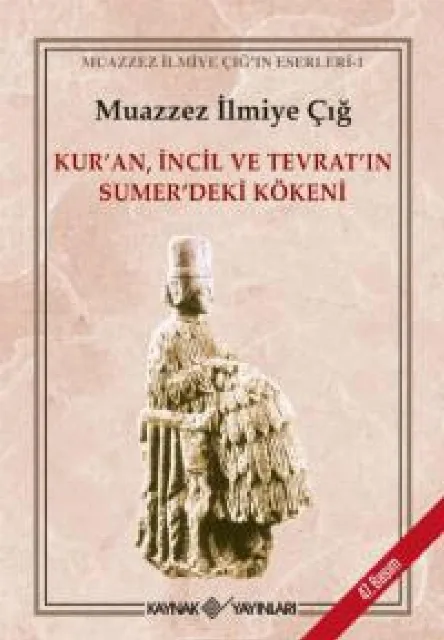
The Sumerian Origins of the Quran, the Gospel, and the Torah
Muazzez İlmiye Çığ was born in Bursa in 1914. In 1931, she became a primary school teacher and worked in that capacity in Eskişehir for four and a half years.
In 1936, she enrolled in the newly established Faculty of Languages, History and Geography at Ankara University. After completing her studies in the departments of Sumerology, Hittitology, and Archaeology in 1940, Çığ was appointed as an expert in cuneiform scripts at the Istanbul Archaeological Museums. She retired after 33 years of work on 74,000 cuneiform tablets—written in the Sumerian, Akkadian, and Hittite languages—housed at the museum.
She has published numerous scholarly books and articles both in Turkey and abroad. Muazzez İlmiye Çığ continues her research on Sumerian culture to this day.
In this book, the author explores the influence of Sumerian religion and literature on Judaism, Christianity, and Islam—as well as on the sacred texts of these religions—presenting her findings through a comparative analysis supported by documentary evidence.
The Sumerians had lost their political autonomy hundreds, if not thousands, of years before the emergence of these religions. Nevertheless, through the writing system they invented—which they refined to be capable of recording any desired content—the Sumerians exerted a profound influence on the peoples of the Middle East, an influence that extended as far as the Western world.
More from This Exhibitor
Education And Resource Publications
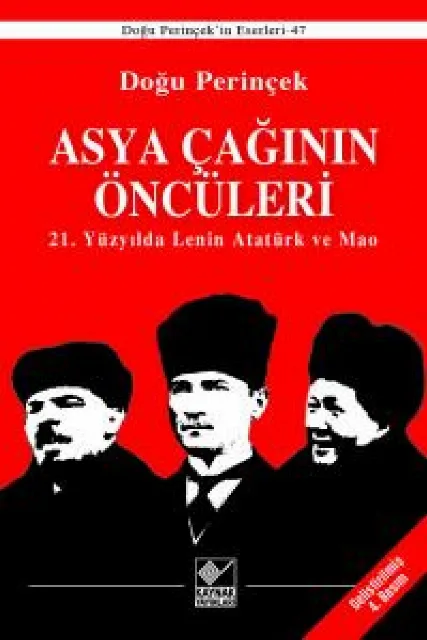
Pioneers of the Asian Century
GÖREV KİTAP VE YAYINCILIK TİC LTD ŞTİ

Cultural Publications
The Secrets Kâşif Kozinoğlu Did Not Take to the Grave
GÖREV KİTAP VE YAYINCILIK TİC LTD ŞTİ